What is a sensory toy?
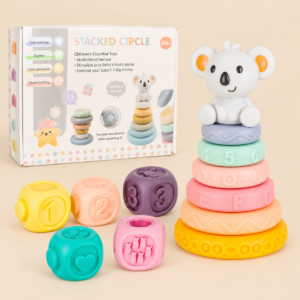
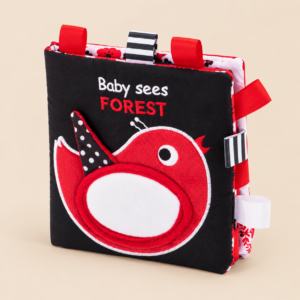
A sensory toy is designed to stimulate a child’s senses. Different textures, contrasting colours, sounds, weight and movement give the child’s brain new information that they learn to process and understand. An ordinary toy is often mainly a picture or a shape, but a sensory toy is meant to be touched, squeezed, rolled and explored. This kind of active discovery is the foundation of how young children learn. A child doesn’t think about the toy, they feel it, and this creates new connections that support motor skills, language and thinking.
Why is sensory play important for children?
In the first years of life, children get to know the world mainly through their senses. Every new texture, sound or colour helps them understand how things differ: soft and hard, smooth and rough, heavy and light. Sensory play develops fine motor skills, because squeezing, stretching and grasping strengthen the fingers and hand muscles. It also supports language development, since while playing together you can name what the child feels: slippery, bumpy, cold. Many children also find sensory play calming. Rhythmic squeezing or watching slime slowly flow can help them wind down after a busy day.
From what age is slime suitable?
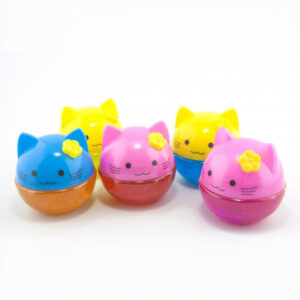
Slime is intended for older children, usually from three years of age. You will always find the exact age recommendation on the product packaging. Slime is not suitable for babies or for children who still put things in their mouth. Play with slime together with your child at first and set clear rules from the start: slime doesn’t go in the mouth or eyes, and hands are washed after playing. It’s easiest to play at a table, on a mat or a tray. After playing, always put the slime back in its container and close the lid so it doesn’t dry out or collect dust. If slime gets onto clothes or a carpet, let it dry and then remove it with a brush.
What does slime develop?
When playing with slime, a child squeezes, stretches, rolls and shapes a material that behaves a little differently every time. This builds finger strength and hand dexterity, the same muscles needed later for holding a pencil. Slime can be shaped into figures, pressed into patterns, or simply watched as it slowly flows through the hands. Many children, and adults too, find that playing with slime helps them focus and relax.